
Smoke alarms are one of those safety devices you rarely think about—until they chirp at 2 a.m. or, worse, fail when you really need them. Even when they’re hardwired into your home’s electrical system, they still need regular replacement and a working battery backup to keep your family safe.
Why Hardwired Smoke Alarms Still Need Replacement
Many homeowners assume that because a smoke alarm is tied into the electrical panel, it will last as long as the house. In reality, every smoke alarm has a limited life span.
Over time, the sensing chamber inside your smoke detector—whether ionization or photoelectric—slowly degrades. Dust, cooking grease, humidity, and tiny insects all work their way into the sensor and reduce its sensitivity. After years of exposure, the detector may still beep when you hit the test button, but it might not respond quickly enough to real smoke in an emergency.
Manufacturers and fire safety organizations generally recommend replacing smoke alarms every 10 years. That guideline applies to both battery‑operated and hardwired smoke detectors. Around the 10‑year mark, the risk of sensor failure or slow response increases, even if the alarm looks fine and the indicator light is on.
Relying on a 15‑ or 20‑year‑old smoke alarm is a classic case of false confidence: the device appears to work, but it may not be reliable when seconds matter.
Technology is another big reason to upgrade aging smoke detectors. Newer smoke alarm models offer improvements such as:
- Better resistance to nuisance alarms from cooking steam
- Dual‑sensor or combination smoke and carbon monoxide detectors
- Improved interconnect features and smarter diagnostics
Replacing old units gives you the benefit of current safety standards and helps your home align with modern electrical and building codes.
How Hardwired Smoke Detectors Work in Your Home
A hardwired smoke alarm is connected directly to your home’s 120‑volt electrical system. This provides a constant power source, so you’re not relying solely on a battery for everyday use. In most modern homes, hardwired smoke detectors are also interconnected: if one alarm detects smoke, it sends a signal along the interconnect wire so all alarms sound at once.
That interconnected system is critical for whole‑house fire protection. A fire that starts in the basement or at the far end of the house can trigger all detectors, giving people in bedrooms or on other levels more time to wake up and get out. But this system still depends on both healthy sensors and proper wiring. When you replace older smoke alarms, you’re not just swapping a plastic cover—you’re restoring the integrity of your home’s fire‑warning network.
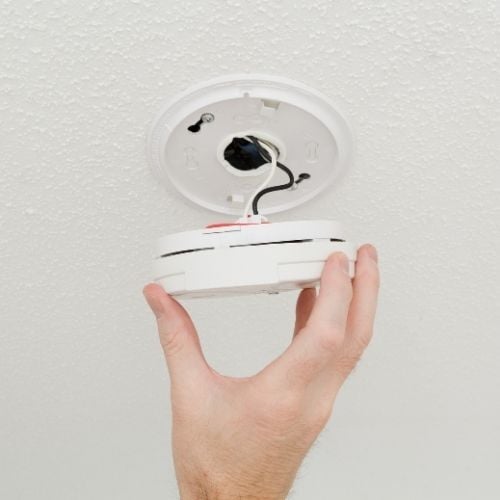
Because hardwired smoke detectors are part of the electrical system, replacing them is more complex than changing a plug‑in device. Matching the wiring harness, maintaining proper interconnects, and verifying that power and grounding are correct are all important steps.
This is why many homeowners choose to have a licensed electrician handle smoke alarm replacement, especially when upgrading a whole house.
Why Hardwired Smoke Alarms Still Use Batteries
One of the most common questions homeowners ask is, “If my smoke alarm is hardwired, why does it still need a battery?” The short answer: backup power.
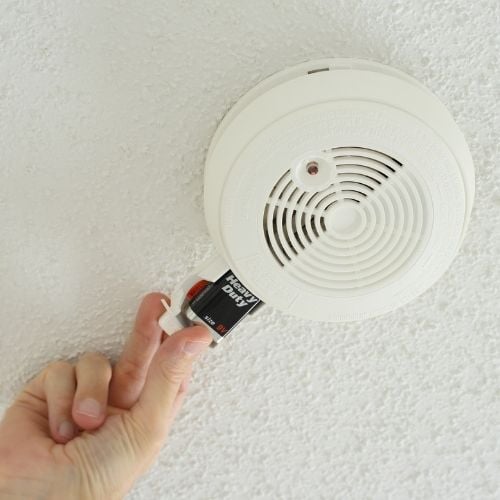
If a fire, electrical fault, storm, or downed line knocks out your home’s power, a hardwired smoke detector without a backup would go silent at the worst possible time. A backup battery ensures the alarm continues to work during power outages, tripped breakers, or loose connections on that particular circuit. It also provides protection if a fire damages the wiring before the smoke reaches other parts of the system.
Think of a hardwired smoke detector as having two power sources: line voltage for normal operation, and a battery for emergencies. This redundancy is intentional. Smoke detection is a life‑safety function, and the system must work under “worst‑case” conditions, not just when everything in the house is working perfectly.
Most hardwired smoke alarms use either:
- A replaceable 9‑volt battery that should be changed at least once a year, or
- A sealed 10‑year lithium battery designed to last the life of the detector
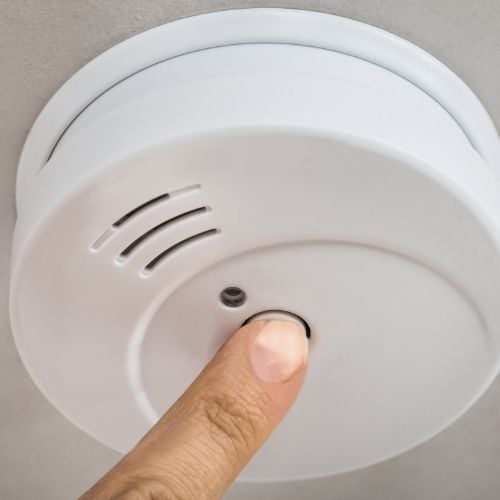
Even with hardwired power, you should still press the test button monthly and replace backup batteries on schedule. If you hear consistent chirping that doesn’t stop after changing the battery, it’s often a sign the unit is at the end of its life and needs a full replacement.
When to Replace Hardwired Smoke Alarms
If you’re not sure when your smoke detectors were installed, it may already be time to replace them. Here are practical signs homeowners can look for:
- The alarm is 10 years old or older (check the manufacture date on the back).
- The detector has yellowed and looks aged or brittle.
- You experience frequent nuisance alarms, even in clean conditions.
- The alarm chirps or indicates trouble even with a fresh battery.
Because hardwired smoke alarms are interconnected, it’s smart to replace all units in the house at the same time. That way, every detector is the same age, using the same technology, and working properly as a system. This is especially true if you’re upgrading to combination smoke/CO detectors or adding additional alarms in hallways and bedrooms to meet modern code.
In many areas, new construction and major remodels require hardwired, interconnected smoke alarms with battery backup on every level, in every bedroom, and outside each sleeping area.
Upgrading your existing system during other electrical work—such as a panel upgrade or interior lighting project—is a cost‑effective way to bring your home up to today’s standards.
Professional Smoke Alarm Replacement in the Tri‑State Area
For homeowners around the Tri‑State, replacing hardwired smoke alarms is a straightforward job for a licensed residential electrician.
A professional can:
- Inspect your existing smoke detectors and wiring
- Verify proper locations in bedrooms, hallways, and living areas
- Replace outdated units with modern, code‑compliant models
- Test interconnects and backup batteries before they leave
Because we’re already working in homes every day—replacing outlets, upgrading electrical panels, adding lighting, installing GFCI and AFCI protection—it’s easy to add smoke alarm replacement to your next visit. If your alarms are more than 10 years old or you’re hearing unexplained chirping, scheduling a professional evaluation is one of the simplest safety upgrades you can make.