
Quick answer: A kitchen GFCI trips when it detects a small current leak in the circuit, usually 4 to 6 milliamps. In kitchens, the most common causes are an appliance with a leaking heating element or motor (refrigerators, toasters, coffee makers, kettles), water or moisture near the sink, too many appliances connected downstream of one GFCI, or a GFCI outlet that is simply worn out. If the GFCI trips again with nothing plugged in, the problem is in the wiring or the device itself, and a licensed electrician should take a look.
The kitchen is one of the hardest-working rooms in the house when it comes to electricity. Water, heat, grease, and a countertop full of appliances all share the same few circuits.
The GFCI outlets there get more nuisance trips than anywhere else. Some of those trips are the device doing its job, and some mean something needs fixing.
Here's how our master electricians diagnose it in Cincinnati and Northern Kentucky kitchens.
What a Kitchen GFCI Is Actually Doing
A GFCI (ground-fault circuit interrupter) compares the current going out on the hot wire with the current coming back on the neutral. If more than a few thousandths of an amp goes missing, it assumes that current is escaping somewhere it shouldn't, possibly through a person, and it shuts the power off in a fraction of a second.
For standard residential GFCIs (Class A), the trip point is between 4 and 6 milliamps, as set by the UL 943 safety standard. That's a very small amount of current, which is why an aging appliance or a little moisture can trip it.
One thing a GFCI outlet does not do: it doesn't trip because a circuit is overloaded. If power cuts out when you run the microwave and the toaster together, and the GFCI button hasn't popped, check the breaker panel.
An overload trips the breaker, not the GFCI outlet (unless your kitchen is protected by a combination GFCI breaker in the panel).
8 Common Reasons a Kitchen GFCI Keeps Tripping
1. The Refrigerator
This is the one we get asked about most. Refrigerators have a compressor motor, a defrost heater, and, in many cases, an ice maker and water line, so several places can build up a small amount of leakage current as the fridge ages.
Tell-tale sign: the GFCI trips at random, often overnight or several hours apart, which lines up with the fridge's defrost cycle.
What to know: a GFCI that trips on the refrigerator is often pointing to a real problem, such as a failing defrost heater, a water leak near the wiring, or a damaged cord. Don't fix it by running the fridge on an extension cord to a different outlet or swapping the GFCI for a regular outlet. Have an electrician check the appliance and the circuit.
2. Toasters, Coffee Makers, Kettles, and Air Fryers
Anything with an exposed or older heating element can leak a little current, especially when it's first switched on, and the element is cold or slightly damp. Older appliances and ones that have been splashed or cleaned while plugged in are the usual suspects.
Tell-tale sign: the GFCI trips the moment you push the toaster lever down or switch on the coffee maker, every time.
Fix: try the appliance on a different GFCI-protected outlet. If it trips there too, the appliance is the problem, and it's usually cheaper to replace it than repair it.
3. The Dishwasher or Garbage Disposal
Dishwashers combine water, a heating element, and a pump motor. Disposals sit under the sink where leaks are common. Either one can trip a GFCI when a seal starts leaking, or a heating element begins to break down.
Tell-tale sign: the trip happens partway through a dishwasher cycle (often during the heated dry), or when the disposal starts up.
4. Water and Moisture Near the Sink
Countertop outlets closest to the sink take the most splashes. Water can get into the receptacle face, work its way down behind the backsplash, or collect in the electrical box, especially when a backsplash or countertop is installed without properly sealing the outlet.
Tell-tale sign: trips happen after heavy dishwashing, wiping down the backsplash, or on humid summer days.
What to do: let the outlet dry out completely before resetting it. If you see discoloration, rust, or scorching on the outlet face, stop using it and call an electrician.
5. One GFCI Is Protecting More Outlets Than You Realize
In many kitchens, a single GFCI outlet protects several regular-looking outlets "downstream" on the same circuit. It might even cover an outlet around the corner in the dining room. Every appliance plugged into any of those outlets adds its small leakage current to the total the one GFCI measures.
A few healthy appliances, each leaking a tiny bit, can add up to enough to trip it.
Tell-tale sign: several countertop outlets go dead at the same time, and resetting one GFCI brings them all back.
Fix: an electrician can split the load so each GFCI protects fewer outlets, or add GFCI protection to additional locations.
6. The GFCI Outlet Is Worn Out
GFCI outlets don't last forever. The electronics inside wear, and heat, moisture, and repeated trips speed that up. An older unit can become oversensitive and trip at random, or worse, stop protecting you at all.
Tell-tale sign: the outlet is 10 or more years old, the reset button feels mushy or won't stay in, or the indicator light (on newer models) is flashing red.
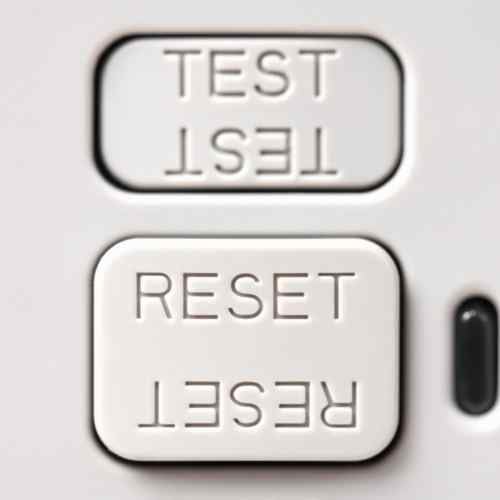
Fix: Press the TEST button once a month. If it doesn't click off or won't reset afterward, replace it. Newer GFCIs have a self-test feature and are generally more resistant to nuisance tripping.
7. Loose, Damaged, or Miswired Connections
Kitchens get remodeled, cabinets get swapped, and backsplashes get tiled, and outlet wiring gets disturbed along the way. A loose neutral, a nicked wire pinched behind a box, or a GFCI with its "line" and "load" connections reversed can all cause trips or leave outlets unprotected.
Tell-tale sign: the GFCI trips even when nothing is plugged into it or into any outlet downstream.
This isn't a DIY fix. It means opening boxes and tracing the circuit, which is exactly what a licensed electrician should do.
8. Power Strips, Extension Cords, and Damaged Cords
A countertop power strip or a cord pinched behind the toaster oven or the fridge can wear through and start leaking current. Cords that run across a wet counter or through a cabinet door hinge are frequent culprits.
Fix: plug appliances directly into the wall, replace any cord that's cracked, flattened, or discolored, and keep cords away from the sink.
A Safe 5-Minute Test You Can Do Yourself
- Unplug everything from the GFCI outlet and every outlet that goes dead when it trips.
- Press RESET. If it won't reset, or trips again right away with nothing plugged in, stop here. It's a wiring, moisture, or device problem. Call an electrician.
- If it holds, plug appliances back in one at a time, waiting a few minutes between each (a few hours for the refrigerator).
- When it trips, the last appliance you plugged in is your prime suspect. Confirm it by trying that appliance on a different GFCI outlet.
- Watch the timing. Trips that happen at random intervals point to the fridge or a moisture problem. Trips that happen right when something switches on point to that appliance.
Never bypass or replace a tripping GFCI with a standard outlet. It's there because kitchens combine water and electricity, and code requires it for a reason.
Does My Kitchen Need GFCI Outlets Everywhere?
In most new construction and remodels, yes. The 2023 National Electrical Code expanded kitchen GFCI protection from countertop outlets to receptacles throughout the kitchen, including the refrigerator outlet that used to be exempt in many homes (Home Depot NEC 2023 overview).
Local adoption matters, though, and the Tri-State has two different rulebooks:
- Ohio adopted the 2023 NEC for one-, two-, and three-family homes effective April 15, 2024, but limited the personnel GFCI rule to 125-volt, 15- and 20-amp receptacles. Ohio said it did not intend 240-volt appliance circuits like ranges and ovens to require GFCI protection under that rule (Ohio Board of Building Standards memo).
- Kentucky applies the 2023 NEC under the Kentucky Residential Code. The GFCI requirement for receptacles over 125 volts and several appliance-circuit GFCI provisions remain delayed, while the new rules on where receptacles go on kitchen islands, peninsulas, and countertops became enforceable on July 15, 2026 (Kentucky Department of Housing, Buildings & Construction).
In an existing home, you generally aren't required to bring an older kitchen up to current code until you remodel or replace that equipment. Even so, adding GFCI protection to every kitchen outlet is one of the least expensive safety upgrades you can make. If you're planning a kitchen remodel on either side of the river, we'll make sure the permit and finished work match the code your city or county enforces.

When to Call an Electrician Right Away
- The GFCI trips again with nothing plugged in
- You see scorch marks, melting, or discoloration on an outlet or cover plate
- You smell burning plastic near an outlet or behind the refrigerator or dishwasher
- The outlet feels warm to the touch
- The GFCI won't reset, or the TEST button doesn't shut it off
- Kitchen outlets are dead, and no GFCI or breaker appears tripped
- Trips started right after a remodel, countertop install, or backsplash project
Get Your Kitchen GFCI Problem Fixed Right the First Time
Premiere Electric has been fixing kitchen electrical problems for homeowners across Cincinnati, Northern Kentucky, and the Tri-State since 1990. Our fully licensed and insured Master Electricians will find the actual cause of the tripping, whether it's an appliance, moisture, a worn GFCI, or wiring behind the backsplash. We'll replace or add GFCI protection where you need it and make sure your kitchen meets your local code.
Call to schedule a kitchen outlet or GFCI service call:
- Kentucky: 859-635-2376
- Ohio: 513-421-2376
Schedule Your Kitchen GFCI Repair →