If you’re thinking about installing landscape lighting around your home, you’re probably wondering how much you can safely DIY and when you really need a licensed electrician. This guide walks you through the differences so you can make a smart, safe choice for your property.
What Is Landscape Lighting?
Landscape lighting (or outdoor lighting) includes everything from simple solar path lights to full low‑voltage lighting systems and hardwired security floodlights.
Common fixtures include path lights, spotlights, uplights, deck step lights, pool and patio lighting, and motion‑activated security lights.
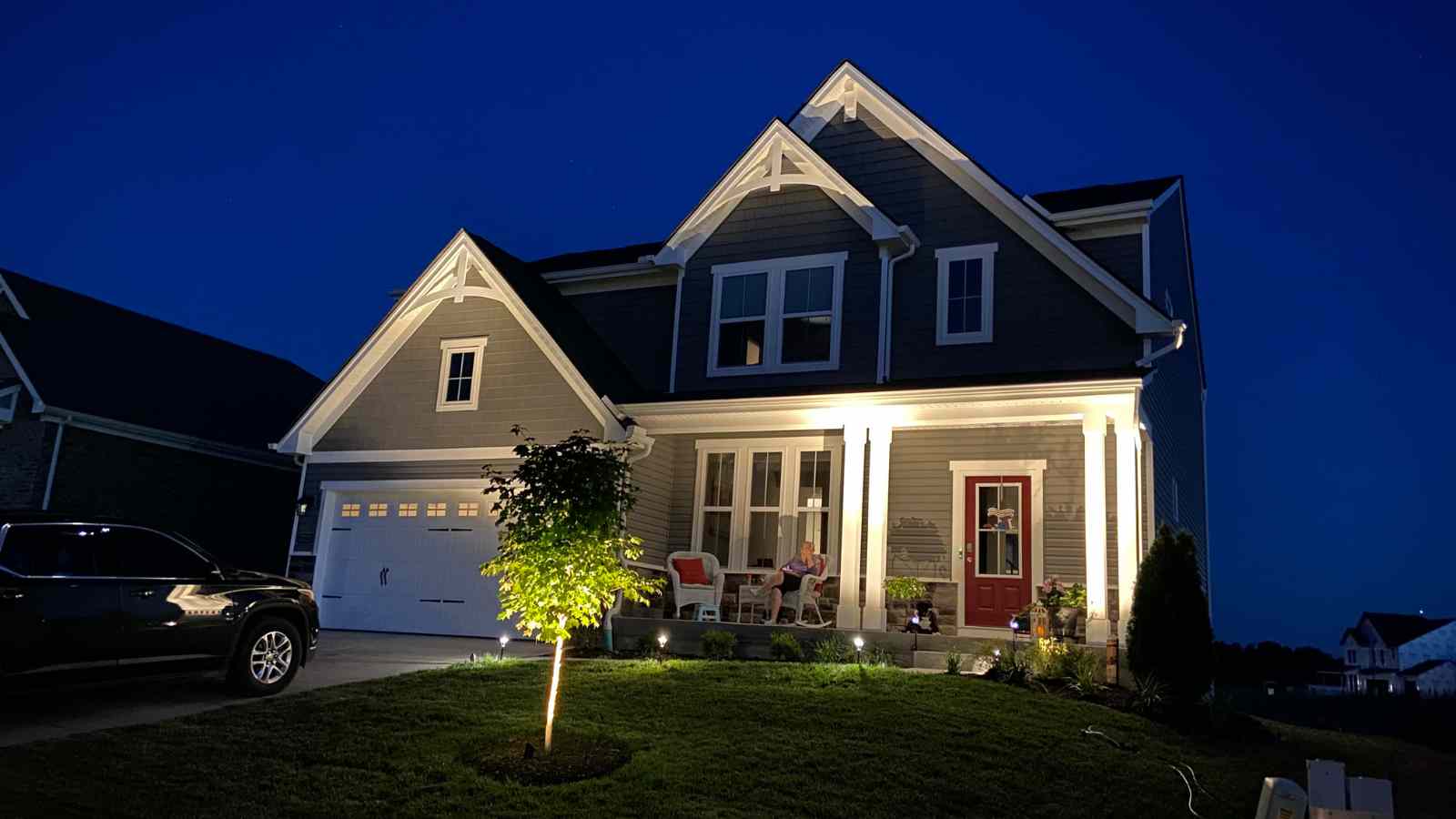
Done right, exterior lighting improves safety, boosts nighttime curb appeal, and makes outdoor living spaces more enjoyable after dark.
If you want a deeper dive into choosing between solar lights and low‑voltage systems, you can read more here:
Solar Lights or Low-Voltage Landscape Lighting?
Do You Legally Need an Electrician for Landscape Lighting?
Whether you need an electrician depends on how your outdoor lights are powered and connected.
- If your project touches your electrical panel, adds new circuits, or requires buried line‑voltage wiring, you’re into “licensed electrician” territory. Local electrical codes and permitting requirements typically apply to this kind of work, and they exist to prevent shock, fire, and insurance issues.
- If you’re simply placing solar lights in the ground or plugging a low‑voltage transformer into an existing outdoor GFCI outlet, most areas treat this more like a homeowner‑friendly project.
Because requirements can vary by jurisdiction and HOA, it’s always wise to double‑check local rules before you start a major outdoor lighting project.
When DIY Landscape Lighting Is Usually Okay
For many homeowners, DIY works well for simpler outdoor lighting options:
- Solar path lights and accent lights that don’t tie into your home’s wiring.
- Plug‑in low‑voltage landscape lighting kits connected to an existing GFCI outlet.
- Swapping out a bulb or replacing a like‑for‑like low‑voltage fixture on an existing run.
These options are great for basic pathway lighting and simple accent lighting, especially if you’re comfortable following manufacturer instructions and don’t need new wiring, outlets, or trenching.
When You Should Hire a Licensed Electrician
There’s a clear line where landscape lighting stops being a simple DIY project and becomes electrical work best left to a professional.
You should call a licensed electrician when:
- You’re installing or extending 120V (line‑voltage) outdoor lighting, such as floodlights, security lights, or pole lights.
- You need new outdoor GFCI outlets, weatherproof boxes, or recessed exterior receptacles.
- You’re running wire underground, through walls, or tying into your main electrical panel.
- You’re upgrading your electrical service, panel, or breakers to handle more exterior lighting.
- You want integrated systems like whole‑yard security lighting, smart switches, timers, motion sensors, or surge‑protected outdoor circuits.
This is where a residential electrical contractor not only keeps you safe, but also ensures your system is code‑compliant and reliable for the long term.
To see how a professional exterior service visit works, you can learn more here:
Exterior Lighting

DIY Low‑Voltage Landscape Lighting vs Professional Installation
Many homeowners are drawn to DIY low‑voltage landscape lighting because it seems simple: a transformer, some cable, and a handful of fixtures. But there are important trade‑offs.
DIY low‑voltage pros:
- Lower upfront cost and no labor bill.
- Flexible placement for path lights and garden accent lighting.
- A manageable weekend project for handy homeowners.
DIY low‑voltage cons:
- Undersized transformers and poor voltage distribution can lead to dim or uneven lighting.
- Exposed connections, shallow burial, and light‑duty cable can fail prematurely.
- Trial‑and‑error layout often results in glare, dark spots, and tangled wiring.
Professional outdoor lighting installation benefits:
- Correct load calculations, proper wire gauge, and balanced lighting runs.
- Neat trenching, correct burial depth, and outdoor‑rated connections.
- Thoughtful design that highlights architecture, trees, and pathways while improving security.
- Streamlined integration with timers, photocells, and smart home controls.
For a closer look at how professional landscape lighting impacts your home, see:
Does professionally installed landscape lighting increase home value?
Safety Risks of DIY Landscape Lighting Without an Electrician
Outdoor lighting mixes electricity, water, soil, and weather, which is why safety and proper installation matter so much.
Common risks include:
- Electrical shock from improperly protected connections or damaged cable.
- Fire hazards from undersized wire, overloaded circuits, or loose terminations.
- Water intrusion into fixtures and junctions not rated for outdoor or wet locations.
- Trip hazards and mower damage caused by exposed or shallow‑buried cable.
A licensed electrician understands how to protect circuits with GFCI and, where appropriate, AFCI breakers, how to ground and bond properly, and how to choose fixtures and boxes that can stand up to the elements.
How a Licensed Electrician Installs Landscape Lighting
A professional exterior lighting project typically follows a structured process:
- Site evaluation and lighting design
The electrician walks the property, listens to how you use your outdoor spaces, and maps out path lights, accent lights, deck lighting, and security lighting zones. - Load calculations and system planning
They calculate total wattage, transformer sizing, and wire gauge, and decide whether new dedicated outdoor circuits or panel upgrades are needed. - Trenching, wiring, and fixture installation
The crew installs conduit or direct‑burial cable to the proper depth, sets up junction boxes and GFCI outlets, and mounts weather‑resistant fixtures in the right locations. - Smart controls, timers, and fine‑tuning
Finally, they program timers, photocells, or smart switches, adjust beam angles, and fine‑tune brightness so your landscape lighting looks great and functions perfectly at night.
If you want all of that handled for you, with one point of accountability, you can explore full exterior electrical services here.

Does Professional Landscape Lighting Really Increase Home Value?
Professionally installed landscape lighting can do more than just make your home look good at night—it can also support your home’s value.
Thoughtful, well‑designed outdoor lighting:
- Enhances curb appeal by showcasing your home’s architecture and landscaping.
- Improves safety on steps, walkways, and driveways.
- Boosts security by deterring intruders around dark corners and entry points.
- Extends the usable hours of patios, decks, and outdoor living areas.
Because it’s a relatively cost‑effective upgrade compared to major interior renovations, many homeowners see landscape lighting as a smart investment in both enjoyment and resale potential.
You can read more about value and return on investment here.
Quick Checklist: Do You Need an Electrician for Your Project?
Use this quick checklist to decide whether to DIY or call a licensed electrician:
- Are you adding or modifying 120V outdoor lighting (floodlights, security lights, post lights)?
- Do you need new exterior GFCI outlets, weatherproof boxes, or recessed outdoor receptacles?
- Are you running wire underground or through walls and tying into your electrical panel?
- Is your existing panel already heavily loaded or outdated?
- Do you want integrated smart outdoor lighting, timers, and motion sensors?
- Do local codes or your HOA require licensed electrical work for exterior projects?
- Do you prefer a professionally designed, warrantied system over trial‑and‑error DIY?
If you answered “yes” to any of these, it’s time to talk to a licensed, insured residential electrician who specializes in exterior electrical service and repair: