Whole-House Surge Protector vs. Power Strips: What Actually Protects Your Home?
A whole-house surge protector installs at your electrical panel and blocks large surges from the utility or nearby lightning before they reach any circuit in your home. A plug-in surge protector only guards the few devices plugged into it, and a basic power strip usually offers no surge protection. For most homes, the best protection is both: a whole-house device at the panel plus quality plug-in protectors at your most sensitive electronics.
That matters more than it used to. Furnaces, air conditioners, refrigerators, washers, ranges, garage door openers, and EV chargers all run on circuit boards now, and most of them are hardwired or plugged in where a power strip can't help. After a season of storms across Cincinnati and Northern Kentucky, here's what actually protects your home and what doesn't.
What Is a Power Surge, and Where Does It Come From?
A power surge is a brief spike in voltage, often lasting only a fraction of a second, well above the normal 120 or 240 volts your home runs on. It's too fast to see, but it's long enough to damage the electronics inside your appliances.
Surges come from two places:
Outside your home
- Nearby lightning strikes
- Utility grid switching and equipment failures
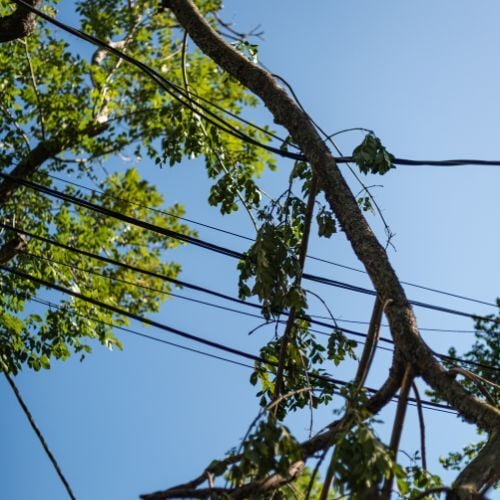
- Downed or damaged power lines
- Power coming back on after an outage
Inside your home
- Motors and compressors cycling on and off, such as your AC, furnace blower, refrigerator, sump pump, well pump, and garage door opener
- Large appliances starting up on shared circuits
Most people think of lightning first, but internal surges are far more common. The National Electrical Manufacturers Association estimates that 60–80% of surges start inside the home or business (ESFI). Each one is small, but they're constant. Over time, those repeated small surges wear down electronics, which is why a control board can fail "for no reason" years before it should. A big external surge, on the other hand, can destroy equipment instantly.
Is a Power Strip the Same as a Surge Protector?
No, even though they often look identical.
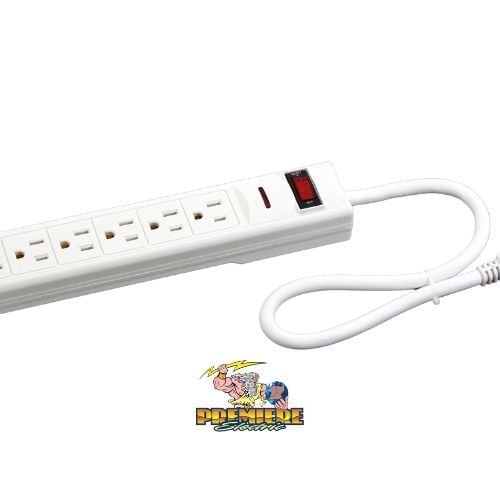
A basic power strip just turns one outlet into several. It has no components that absorb or divert a surge (Belkin). A plug-in surge protector contains components designed to clamp excess voltage and divert it away from your devices.
How to tell which one you have: check the packaging or the label on the bottom. A real surge protector will show:
- A UL 1449 listing (the safety standard for surge protective devices)
- A joule rating (how much surge energy it can absorb)
- A clamping voltage or VPR (the voltage at which it starts protecting; lower is better)
If none of those appear, it's a power strip, and it's giving you extra outlets, not protection.
Power Strip vs. Plug-In Surge Protector vs. Whole-House Surge Protector
| Basic power strip | Plug-in surge protector | Whole-house surge protector | |
|---|---|---|---|
| Where it goes | Wall outlet | Wall outlet | At or next to the electrical panel |
| What it protects | Nothing (extra outlets only) | Only devices plugged into it | Every circuit in the home |
| Protects HVAC, range, washer/dryer, well pump, EV charger | No | No | Yes |
| Handles large external surges | No | Limited | Designed for it |
| UL 1449 category | Not applicable | Type 3 | Type 1 or Type 2 |
| Installed by | Homeowner | Homeowner | Licensed electrician |
What Does a Whole-House Surge Protector Actually Do?
A whole-house surge protector sits at your electrical panel, the point where power enters your home's wiring. When a surge arrives, it diverts the excess voltage to ground before it can travel out to your circuits, appliances, and electronics.
Under the UL 1449 standard, surge protective devices fall into types based on where they're installed (UL 1449 classification overview):
- Type 1 is installed on the line side of the main breaker, ahead of the panel.
- Type 2 is installed on the load side at the panel. This is the most common choice for homes.
- Type 3 is point-of-use protection, meaning the plug-in surge protectors at your outlets.
A whole-house unit protects equipment that plug-in protectors simply can't reach:
- Furnace, air conditioner, and heat pump control boards
- Ranges, wall ovens, and dishwashers
- Washers and dryers
- Refrigerators and freezers
- Well pumps and sump pumps
- Garage door openers
- EV chargers
- Smart thermostats, smart switches, and LED lighting
What it can't do: No surge protector can guarantee protection from a direct lightning strike to your home. Phone, cable, satellite, and internet lines can also carry surges into your electronics, so those lines need their own protection.
Why Isn't a Whole-House Surge Protector Enough on Its Own?
Because surges come from both outside and inside your home, the best approach is layered protection, sometimes called cascade protection.
- The panel unit takes the big hit from lightning, the utility, and grid problems.
- Plug-in surge protectors handle the leftover energy that gets past the panel, plus small surges created by appliances inside your home.
Use quality plug-in surge protectors for:
- TVs and home theater equipment
- Computers and home office setups
- Gaming consoles
- Routers, modems, and network equipment
When buying plug-in protectors, look for a UL 1449 listing, a meaningful joule rating, a low clamping voltage, and an indicator light that shows protection is still active. Surge protectors wear out as they absorb surges. When the indicator light goes out, or after a major surge, replace the unit.
Is a Whole-House Surge Protector Worth It?
For most homes, yes. The math is simple: a whole-house surge protector installed by a licensed electrician typically costs between $300 and $600. You will need to have 2 available spaces in your existing panel box for the breaker installation.
Compare that with what a single surge can cost:
- A furnace or AC control board replacement
- A new refrigerator, range, or washer with electronic controls
- A replacement EV charger or smart thermostat
- Computers, TVs, and networking equipment
One damaged control board can cost more than the surge protector that would have prevented it.
A whole-house surge protector is especially worth it if you have:
- High-efficiency HVAC or a heat pump
- Newer appliances with electronic controls
- An EV charger, solar system, generator, or well pump
- A home office or expensive electronics
- A neighborhood with frequent outages or storm damage
The best time to add one: during a panel upgrade, service upgrade, or generator installation, when the panel is already open. Adding it then keeps the extra cost to a minimum.
Is Surge Protection Required by Code in Kentucky and Ohio?
It depends on which side of the river you're on.
Since the 2020 edition, the National Electrical Code (Section 230.67) has called for a Type 1 or Type 2 surge protective device on services supplying homes, including when a service is replaced (Leviton). Each state decides how to adopt that rule.
- Kentucky: Under the Kentucky Residential Code, the NEC 230.67 surge protection requirement became fully enforceable on July 15, 2026 (Kentucky Department of Housing, Buildings & Construction). Projects with plan approval or an electrical permit issued before that date aren't required to follow it.
- Ohio: The Residential Code of Ohio made surge protection optional, changing the rule to apply "where provided" (Ohio Board of Building Standards).
What that means for you: If you're in Northern Kentucky and replacing your service or panel, plan on including surge protection. If you're in Ohio, it isn't required, but it's still one of the most cost-effective protections you can add. Either way, existing homes generally don't have to add one unless the service is being replaced.
What Are the Signs a Surge Has Already Damaged Something?
Surge damage isn't always obvious. Watch for:
- Electronics or appliances that stopped working after a storm or power outage
- Clocks, displays, or smart devices that keep resetting
- Appliances behaving erratically or showing error codes after an outage
- GFCI or AFCI devices that trip after storms or won't reset (see our GFCI guide)
- A plug-in surge protector with its indicator light out
- A burning smell near an outlet, appliance, or the panel
If you smell burning or see scorch marks, turn off the affected circuit at the panel if it's safe to do so, and call an electrician right away.
How Is a Whole-House Surge Protector Installed?
A whole-house surge protector is mounted at or near your electrical panel and connected to it, usually on a dedicated breaker. For most homes, installation is straightforward and often takes about 1 hour.
This isn't a DIY project. It means working inside a live electrical panel, and a surge protector only works if it's correctly connected and properly grounded. A poor ground connection can leave you with a device that looks installed but doesn't protect anything.
Once it's installed, most units have a status indicator light. Check it occasionally, especially after storms. Surge protectors wear as they absorb surges, so a unit that has taken a major hit may need replacing. Plan on a lifespan of about 5 to 10 years normally, but it isn't uncommon for some to last up to 15 years, depending on how many surges your home sees.
Why Do Tri-State Homeowners Choose Premiere Electric for Surge Protection?
- Serving Cincinnati, Northern Kentucky, and the Tri-State since 1990
- Fully licensed and insured Master Electricians who know both Kentucky and Ohio code
- All 5-star Google reviews
- One visit for the whole job: we can add surge protection during a panel upgrade, generator installation, or EV charger installation
- We do it right the first time, with proper grounding, permits, and inspections handled

Protect Every Circuit Before the Next Storm
Don't wait for the next storm to find out what a power strip can't protect. Schedule a whole-house surge protector installation or a panel evaluation with a Premiere Electric Master Electrician.
Call today:
- Kentucky: 859-635-2376
- Ohio: 513-421-2376