
Why Does My Breaker Keep Tripping With Nothing Plugged In?
Quick answer: A breaker can keep tripping even when nothing appears plugged in because outlets aren't the only things connected to the circuit. Hardwired lights, ceiling fans, smoke detectors, outdoor fixtures, furnaces, dishwashers, and other equipment may still be drawing power. The circuit could also have a short circuit, ground fault, loose connection, damaged wire, faulty breaker, or arc-fault problem.
You can perform a few safe checks without taking anything apart. However, if the breaker trips again with everything turned off and unplugged, leave it off and have a licensed electrician inspect the circuit.
Premiere Electric provides residential electrical troubleshooting, circuit breaker replacement, and panel service throughout Cincinnati, Northern Kentucky, and the surrounding Tri-State area.
Why Does It Trip?
A circuit breaker is a safety device. It shuts off power when it detects an electrical condition that could overheat wiring, damage equipment or create a fire or shock hazard.
When a breaker trips with nothing plugged in, the problem generally falls into one of the following categories.
A hidden electrical load
You may have unplugged everything you can see without removing every load from the circuit. Breakers can also supply:
- Ceiling lights and recessed lighting
- Bathroom exhaust fans
- Ceiling and attic fans
- Smoke and carbon monoxide detectors
- Doorbells and transformers
- Outdoor lights and receptacles
- Garage outlets
- Furnaces and HVAC equipment
- Garbage disposals and dishwashers
- Sump pumps
- Appliances connected behind cabinets
- Outlets in another room
Circuit labels are not always accurate, especially if a home has been remodeled or circuits have been extended. A breaker labeled “bedroom,” for example, might also control hallway lights, an outdoor outlet or part of another room.
Call 859-635-2376 in Kentucky or 513-421-2376 in Ohio to schedule residential electrical service in Cincinnati, Northern Kentucky, or the surrounding Tri-State area.
A short circuit
A short circuit happens when electrical current takes an unintended path between conductors. The sudden increase in current can trip the breaker immediately, even when no appliance is plugged into an outlet.
Possible causes include:
- Damaged wire insulation
- Loose connections
- A failed switch, outlet, or light fixture
- A screw or nail that has damaged a wire
- Wires pinched during a repair or renovation
- Deteriorated wiring inside the wall
A breaker that trips immediately after being reset—with all known loads disconnected—may indicate a short circuit. This is not a DIY repair.
A ground fault
A ground fault occurs when electricity escapes its intended path and flows toward a grounded surface. Moisture is a common trigger, particularly on circuits serving bathrooms, basements, garages, patios, and outdoor outlets.
Rain, condensation, plumbing leaks, damaged weatherproof covers, or moisture inside an exterior electrical box can create a fault even when nothing is plugged in.
If the affected circuit includes exterior receptacles, see Why Are My Outdoor Outlets Not Working? for additional troubleshooting steps.
An AFCI problem
Many Cincinnati and Northern Kentucky homes have arc-fault circuit interrupter breakers, commonly called AFCI breakers. These breakers detect dangerous electrical arcing that an ordinary breaker might not.
An AFCI may trip because of:
- A loose electrical connection
- Damaged wiring
- A failing switch or receptacle
- A damaged power cord
- An incompatible device
- A problem with the breaker itself
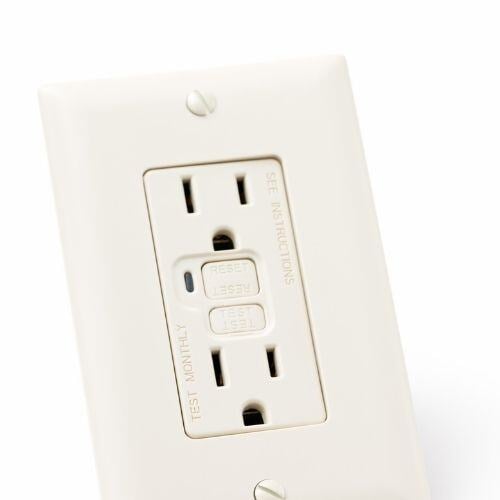
AFCI, GFCI, and dual-function breakers normally have a test button and identifying text on the front. Learn more in GFCI vs. AFCI: Which Does Your Bathroom Need?.
A faulty circuit breaker
Circuit breakers can wear out or become damaged. A weak or defective breaker may trip below its rated load or fail to remain in the ON position.
However, don't assume the breaker is bad just because it keeps tripping. The breaker may be responding correctly to a wiring fault that you cannot see. A licensed electrician should test the circuit before replacing the breaker.
Read Do I Need an Electrician to Replace a Circuit Breaker? before attempting any panel repair.
A loose connection
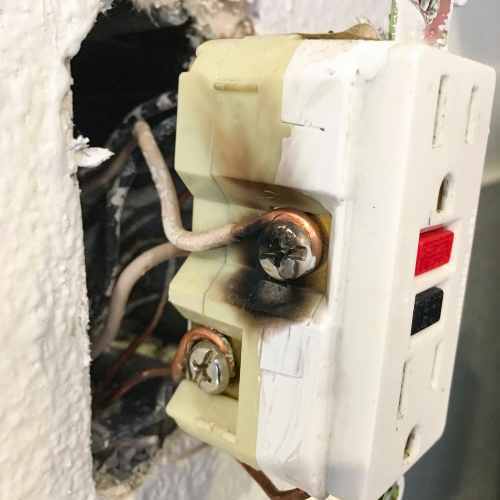
A loose connection at a switch, receptacle, fixture, junction box, or electrical panel can create heat and electrical arcing. Because the problem may be inside a wall or electrical box, unplugging appliances may not stop the breaker from tripping.
Possible warning signs include:
- Buzzing or crackling
- Flickering or dimming lights
- Intermittent power
- Warm outlets or switches
- Discoloration around a device
- A burning or melted-plastic smell
If you notice any of these symptoms, stop troubleshooting and call an electrician.
Safe DIY Troubleshooting
Only perform these steps if there is no burning smell, smoke, heat, sparking, buzzing, water or visible damage. Do not remove the electrical panel cover, open outlets or switches, touch wiring, or use tools inside the panel.
Identify the circuit
Check the label next to the tripped breaker. Walk through your home and determine which lights, outlets, fans, and hardwired equipment have lost power.
Do not rely entirely on the handwritten panel label. Test nearby rooms, hallways, the garage, basement, and exterior outlets to see whether they share the circuit.
Disconnect every load
Unplug everything connected to the affected circuit, including power strips, chargers, lamps, and appliances that may be hidden behind furniture.
Also turn off:
- Light switches
- Ceiling fans
- Bathroom exhaust fans
- Outdoor lighting
- Garbage disposals
- Other accessible hardwired equipment
Do not disconnect wiring or pull hardwired appliances out of place.
Inspect visible devices
Without removing covers, check accessible cords, plugs, switches, and outlets for:
- Cracked or melted plastic
- Scorch marks
- Loose plugs
- Frayed cords
- Moisture
- Rust or corrosion
- Warmth
- Burning odors
If you find any of these warning signs, do not reset the breaker. Leave the circuit off and schedule an electrical inspection.
Reset it once
A tripped breaker may sit in a middle position that looks almost like it is still on. To reset it:
- Make sure your hands and the floor are dry.
- Stand to the side of the panel.
- Move the breaker firmly to the OFF position.
- Move it back to the ON position.
- Listen and watch without touching anything else.
Reset the breaker one time only. Do not keep forcing it on if it trips again.
Watch what happens
What the breaker does next can help narrow down the problem:
- It trips immediately: Leave it off. A short circuit, ground fault, wiring problem, hardwired equipment fault, or defective breaker may be present.
- It trips after several minutes: A hidden load, overheating connection, or equipment that cycles automatically may be involved.
- It remains on: Turn on lights and reconnect devices one at a time, waiting briefly between each one.
- It trips after one device starts: Unplug that device and stop using it until it's repaired or replaced.
- It trips when a switch is used: Leave the breaker off and have the switch, fixture and wiring inspected.
Keeping notes about the room, time, weather, and equipment operating when the trip occurs can help an electrician diagnose an intermittent problem.
Avoid These Mistakes
A breaker that keeps tripping is not something to bypass or overpower. Avoid these unsafe responses:
- Do not repeatedly reset the breaker.
- Do not hold the breaker in the ON position.
- Do not replace it with a higher-amperage breaker.
- Do not remove the panel cover.
- Do not touch or tighten wires inside the panel.
- Do not replace an AFCI or GFCI breaker with a standard breaker.
- Do not use an extension cord as a permanent workaround.
- Do not assume the breaker is defective without testing the circuit.
- Do not ignore the problem because the breaker eventually stays on.
Installing a larger breaker without verifying the circuit’s wire size could allow the wiring to overheat before the breaker trips.

When to Call
Call a licensed residential electrician if:
- The breaker trips with everything unplugged and turned off.
- It trips immediately after one reset.
- You cannot identify everything controlled by the circuit.
- The breaker won't stay in the ON position.
- You hear buzzing, popping, or crackling.
- The panel, breaker, switch, or outlet feels warm.
- You smell burning or melting plastic.
- You see scorch marks, rust, corrosion, or melted components.
- The circuit serves a bathroom, basement, garage, or outdoor area where moisture may be present.
- Lights flicker or dim before the breaker trips.
- The breaker is an AFCI, GFCI, or dual-function model that repeatedly trips.
- Your home has older, ungrounded, or knob-and-tube wiring.
- The problem began after drilling, hanging shelves, renovating, or performing other work near the wiring.
- The breaker continues tripping without a consistent pattern.
Frequent trips can also indicate that your home needs another circuit or greater electrical capacity. See How Do You Know If a Circuit Is Overloaded? for additional warning signs.
Cincinnati and NKY Service
Electrical systems vary widely across homes in Cincinnati and Northern Kentucky. Older wiring, past renovations, outdoor moisture, and rising demand from modern appliances can make breaker problems hard to diagnose without proper testing.
Premiere Electric has provided residential electrical service and repair across the Tri-State area since 1990. Our fully licensed and insured master electricians troubleshoot the entire circuit instead of simply replacing parts and hoping the problem stops.
Services include:
- Circuit breaker testing and replacement
- AFCI and GFCI troubleshooting
- Electrical panel upgrades
- Dedicated circuit installation
- Outlet and switch replacement
- Whole-house service upgrades
- Rewiring and knob-and-tube replacement
Review Premiere Electric’s complete Cincinnati and Northern Kentucky service area.
Breaker Troubleshooting FAQ
Schedule Breaker Service
If your breaker keeps tripping with nothing plugged in, do not ignore it or keep resetting it. Premiere Electric’s licensed and insured master electricians can identify whether the cause is a hidden load, damaged wiring, moisture, a failing device, an arc fault, or the breaker itself.
Call 859-635-2376 in Kentucky or 513-421-2376 in Ohio to schedule residential electrical service in Cincinnati, Northern Kentucky, or the surrounding Tri-State area.